Commercial operations & subscription billing
Service Offering
A no-code way to design, price, sell, and bill a productized service — and run the whole subscription lifecycle from one place.
In short
A full commercial subscription platform — marketplace, tiered and usage-based pricing, a verifiable billing ledger, and operator analytics — built as configuration rather than bespoke software.
Pricing lives in spreadsheets nothing enforces. The catalogue customers see drifts from what finance invoices, usage-based pricing needs custom engineering, and no one can say what changed or who approved it. The gap between what you sell and what you bill quietly leaks revenue.
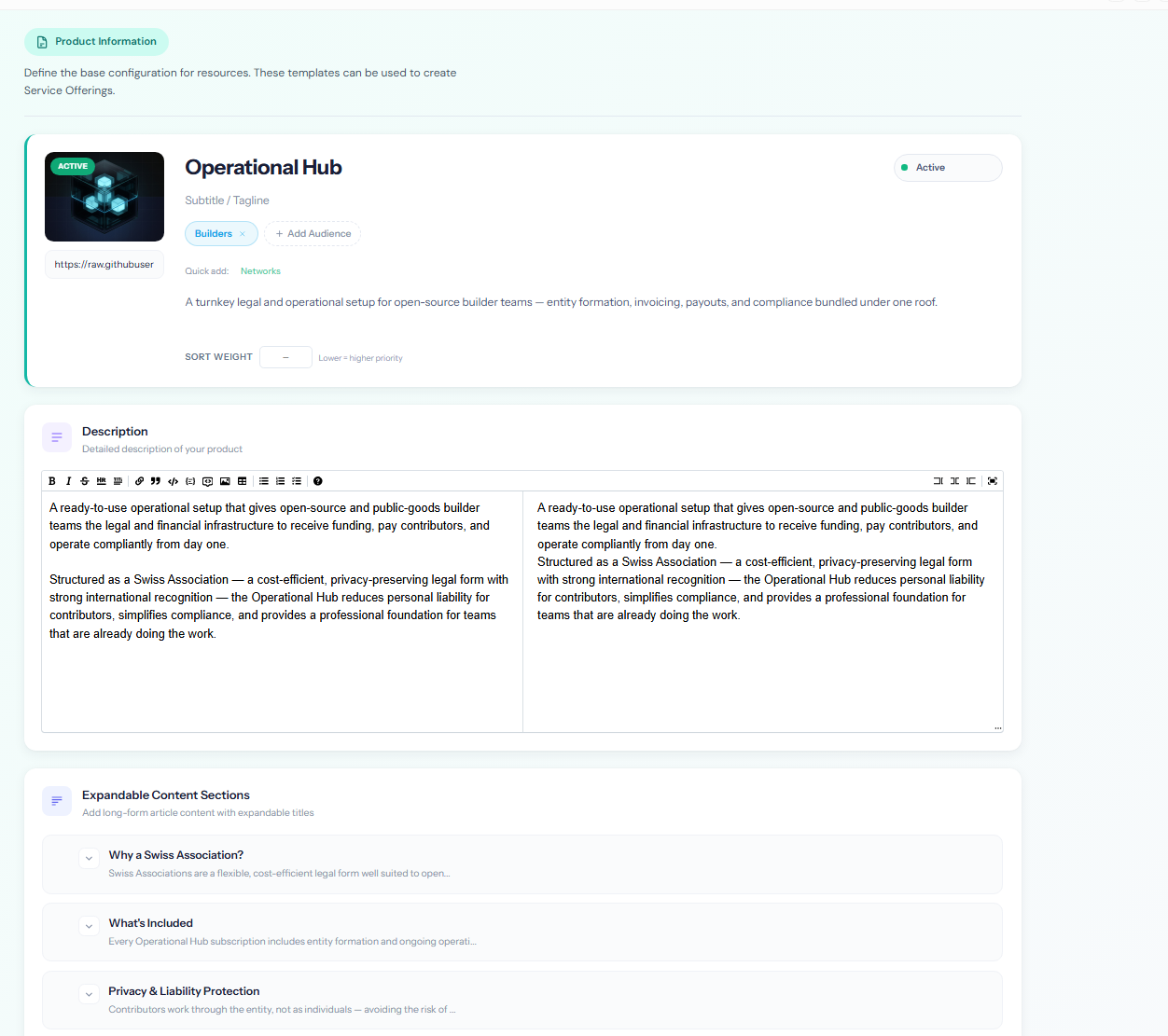
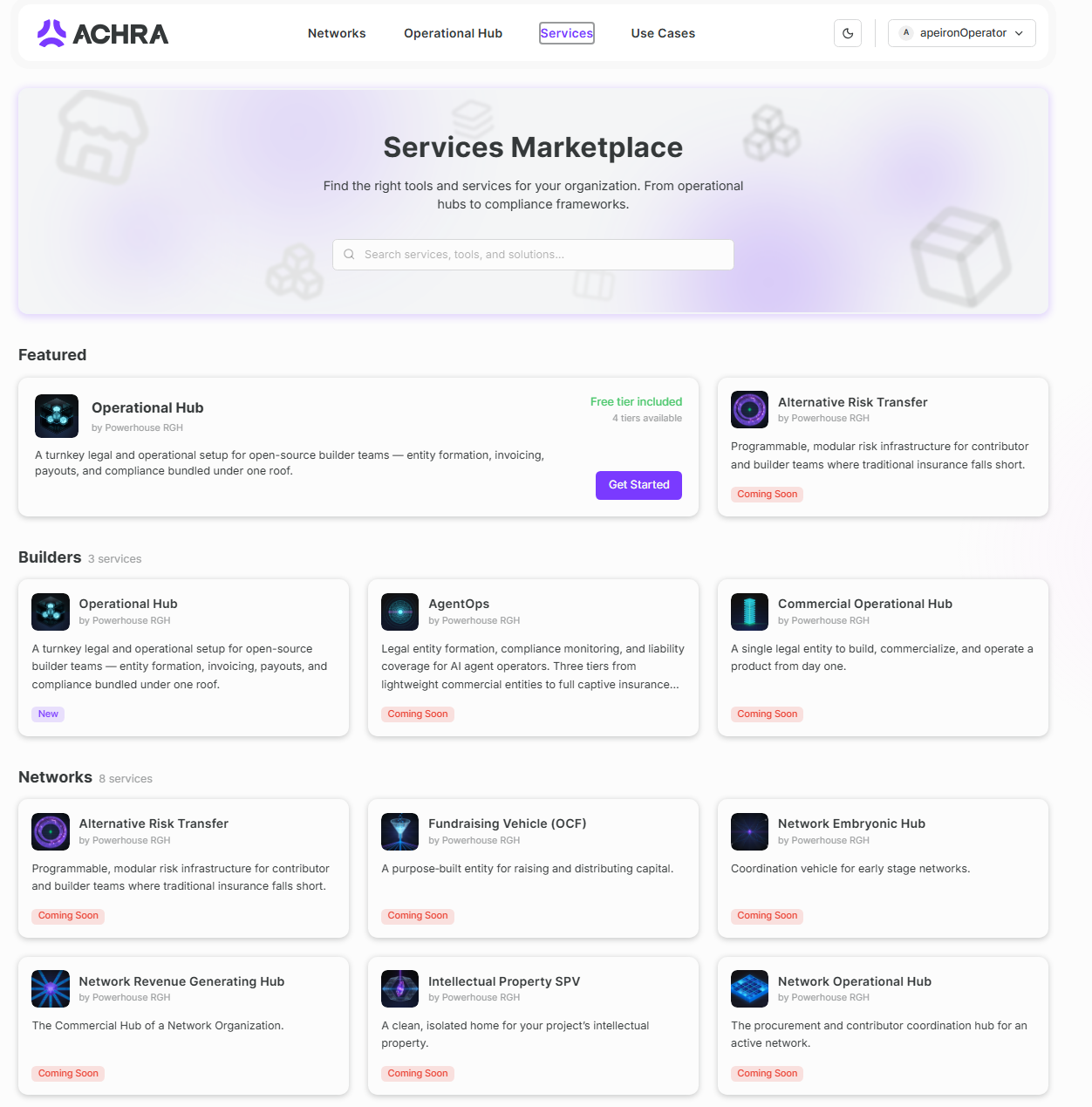
Stand up a complete, billable service without code. Define the product, build tiers and billing cycles, and add usage metrics with real billing semantics — free limits, overage pricing, cumulative or not. It publishes to a marketplace, and the same system runs the back office: a ledger moving charges from charged → invoiced → paid, on-demand invoices, and a dashboard tracking MRR, plans, and usage.
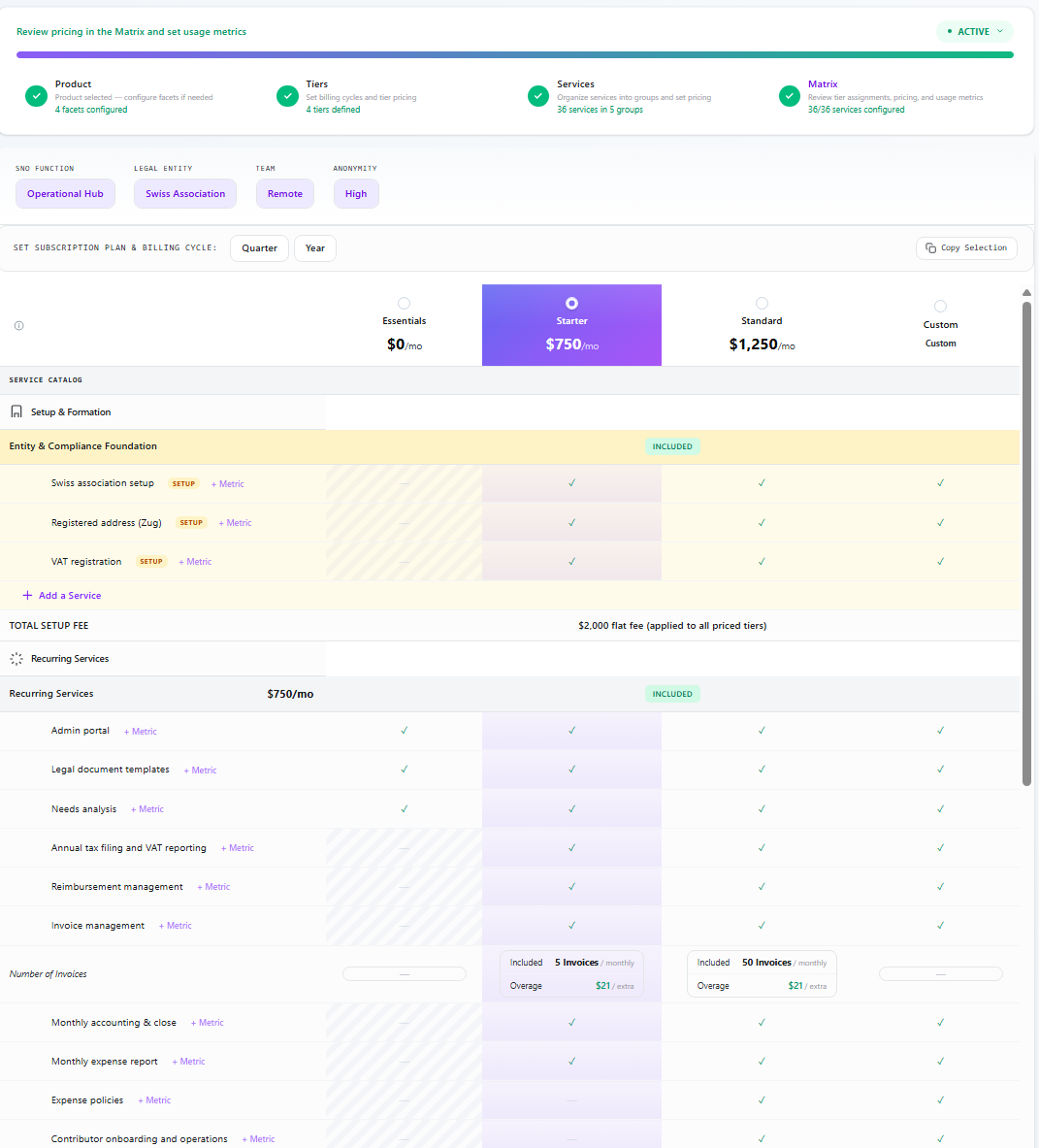
One document model drives the marketplace, the billing engine, and the dashboard — so what you sell and what you bill can’t drift apart. Tiers and metrics are data, not code: reshape the commercial model by editing a document. Every change is a signed operation, so the ledger is the document’s own state, not a report built after the fact.
- Launch or change an offering in an afternoon — pricing is configuration, not a ticket.
- One source of truth — the tier a customer picks is the structure that bills them.
- Usage-based pricing out of the box — metrics, limits, and overage, no custom code.
- Every charge traces to a signed operation.
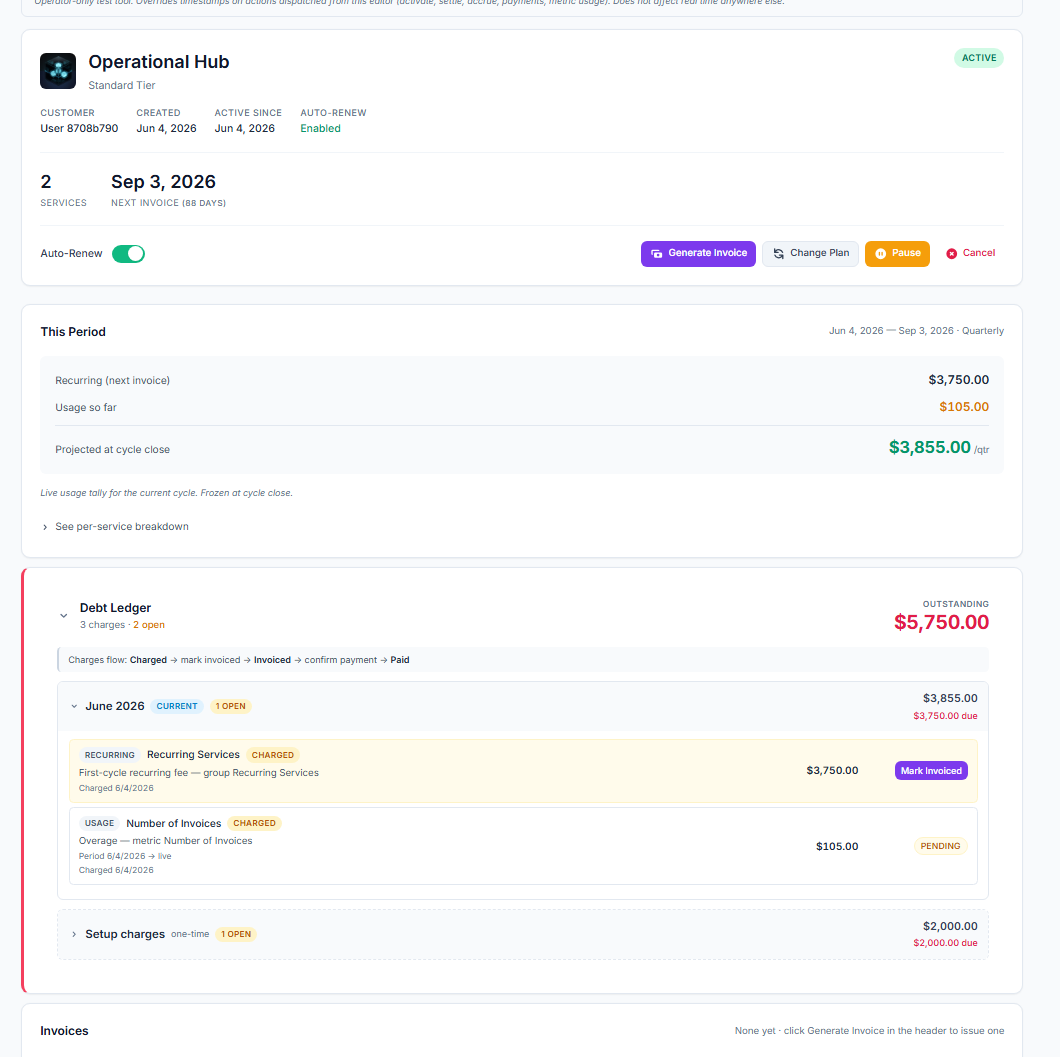
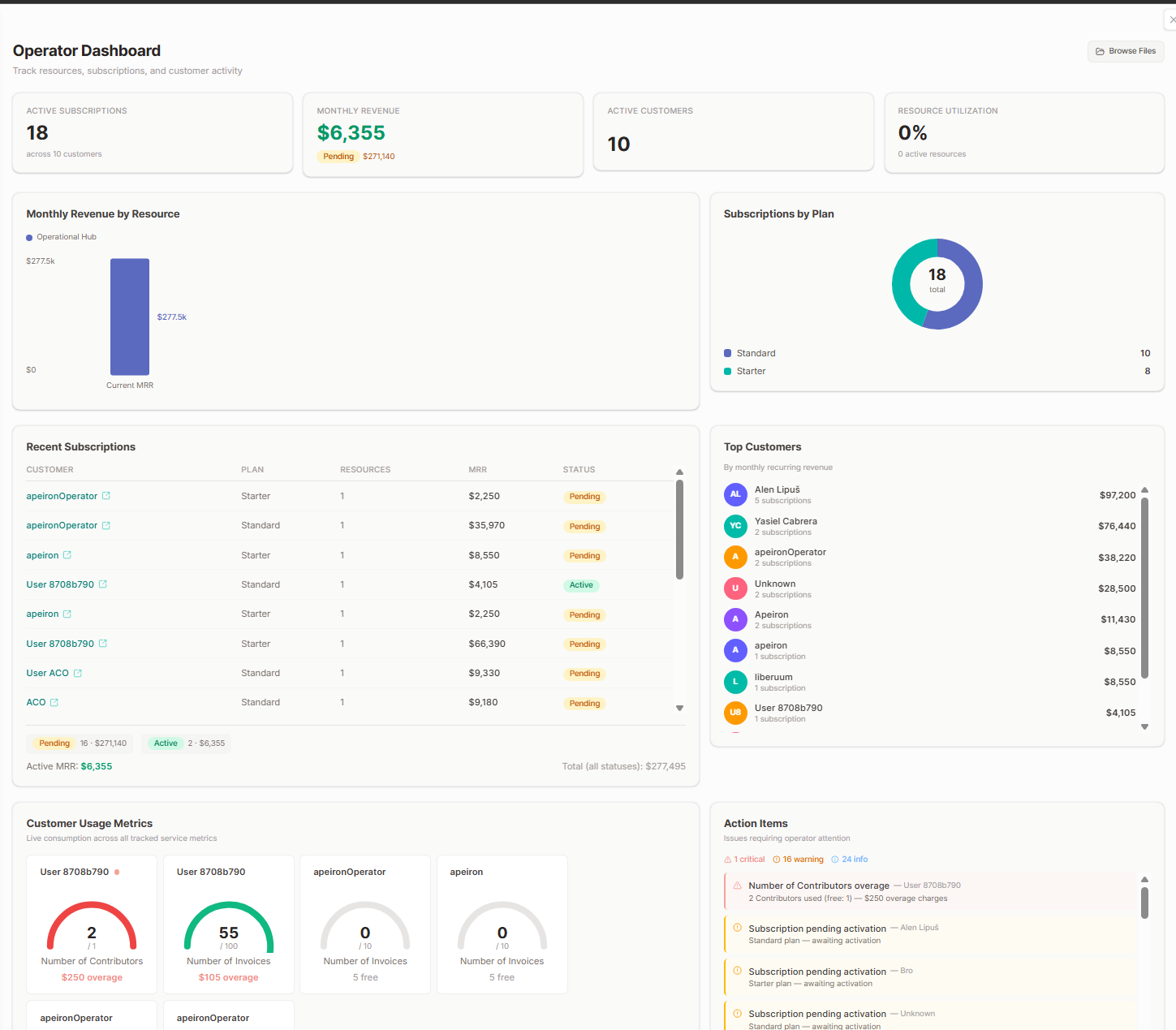
The operator dashboard — MRR, plans, usage, and action items across the book of business.
Same framework, your domain
Have a problem that looks nothing like these?
These are a handful of examples, not a product list — the same building blocks adapt to whatever you’re working on.