Legal entity formation & back-office operations
Onboarding Operational Hub
A turnkey legal and operational home — entity, payments, compliance, and reporting — delivered to a team as a live, owned workspace rather than a folder of PDFs and a pile of SaaS logins.
In short
A legal-and-operations services business delivering its entire customer-facing product as a Powerhouse workspace — entity documents, payment operations, reports, and portable identity all living as documents in a drive the customer owns.
Builder teams and DAOs do real economic work before they have a back office for it. Funding, cross-border payouts, compliance, and clean records become a second job in spreadsheets and email. Standing up a legal entity is worse — which structure, which jurisdiction, what tradeoffs — with answers scattered across lawyers and forum posts.
A complete operational home from day one — a short, legible journey from entity choice to running workspace.
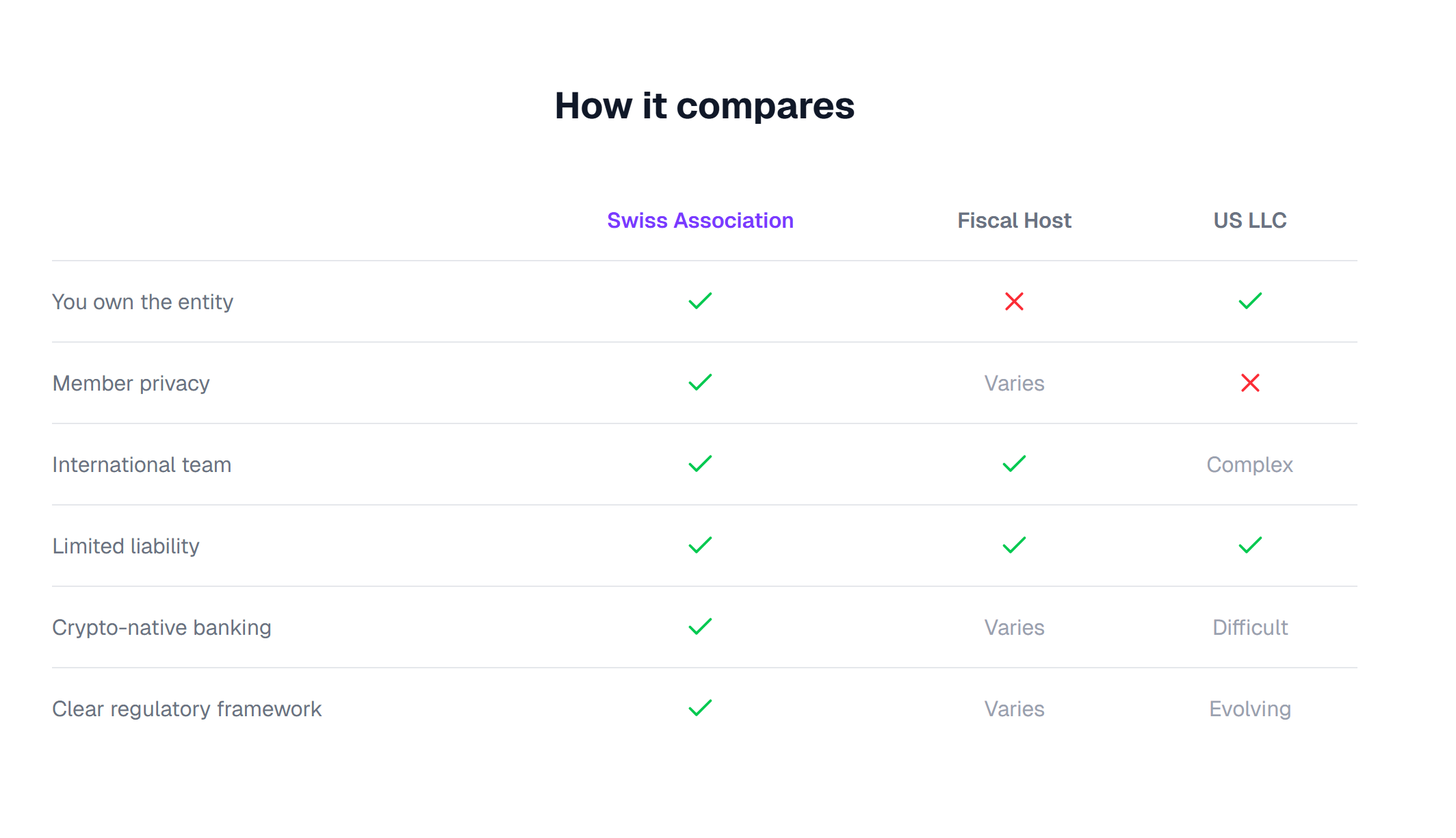
- Evaluate. Compare the legal options (Swiss Association vs. fiscal host vs. US LLC) across ownership, privacy, liability, and regulatory clarity — a decision made on facts.
- Onboard. Sign in with a portable identity, pick a plan, and the entity is formed with licensed counsel: address, VAT docs, templates, founding documents.
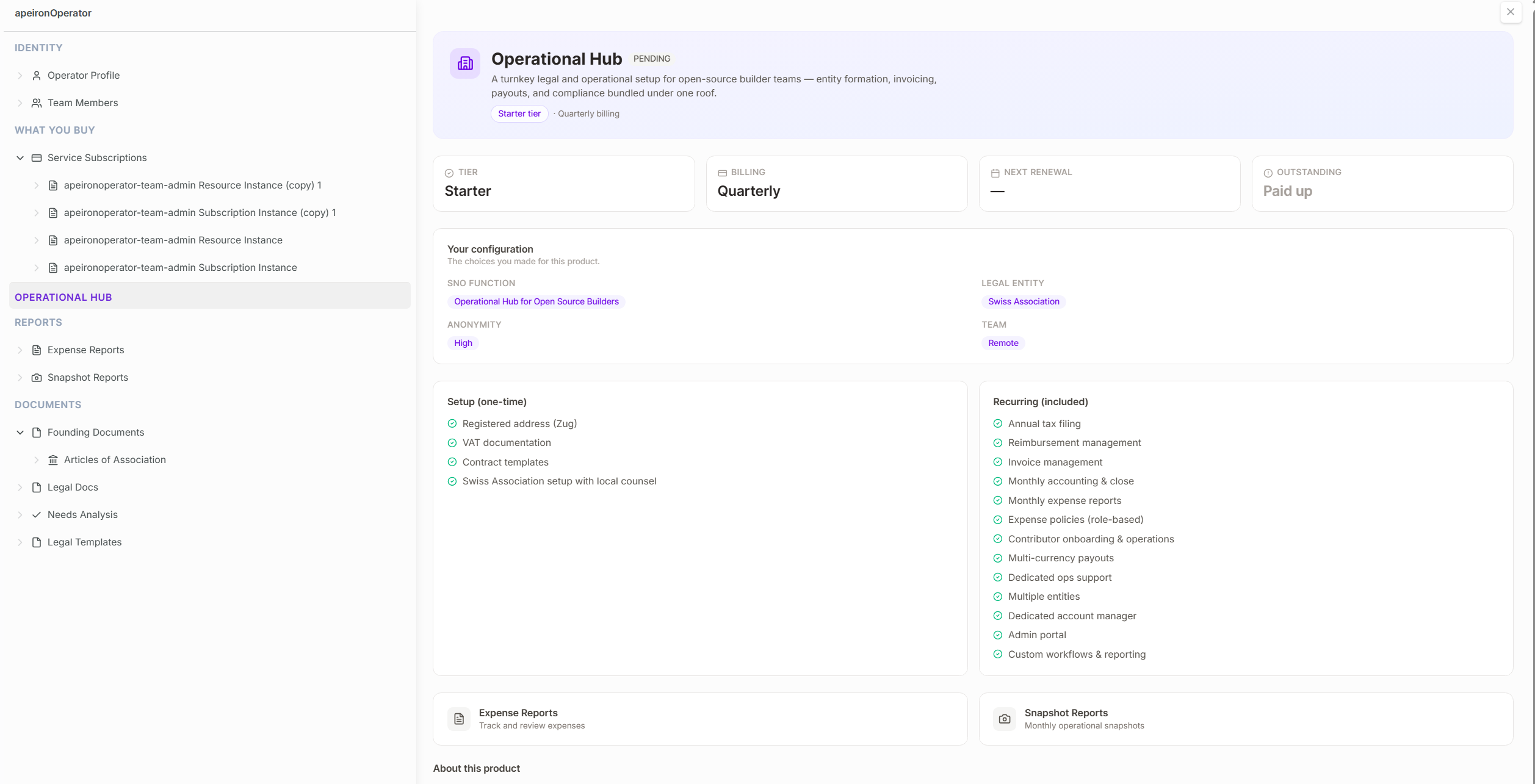
- Operate. The Hub becomes a living workspace — setup tasks, recurring services (tax filing, payouts, accounting close), legal docs, and reports, all owned by the team.
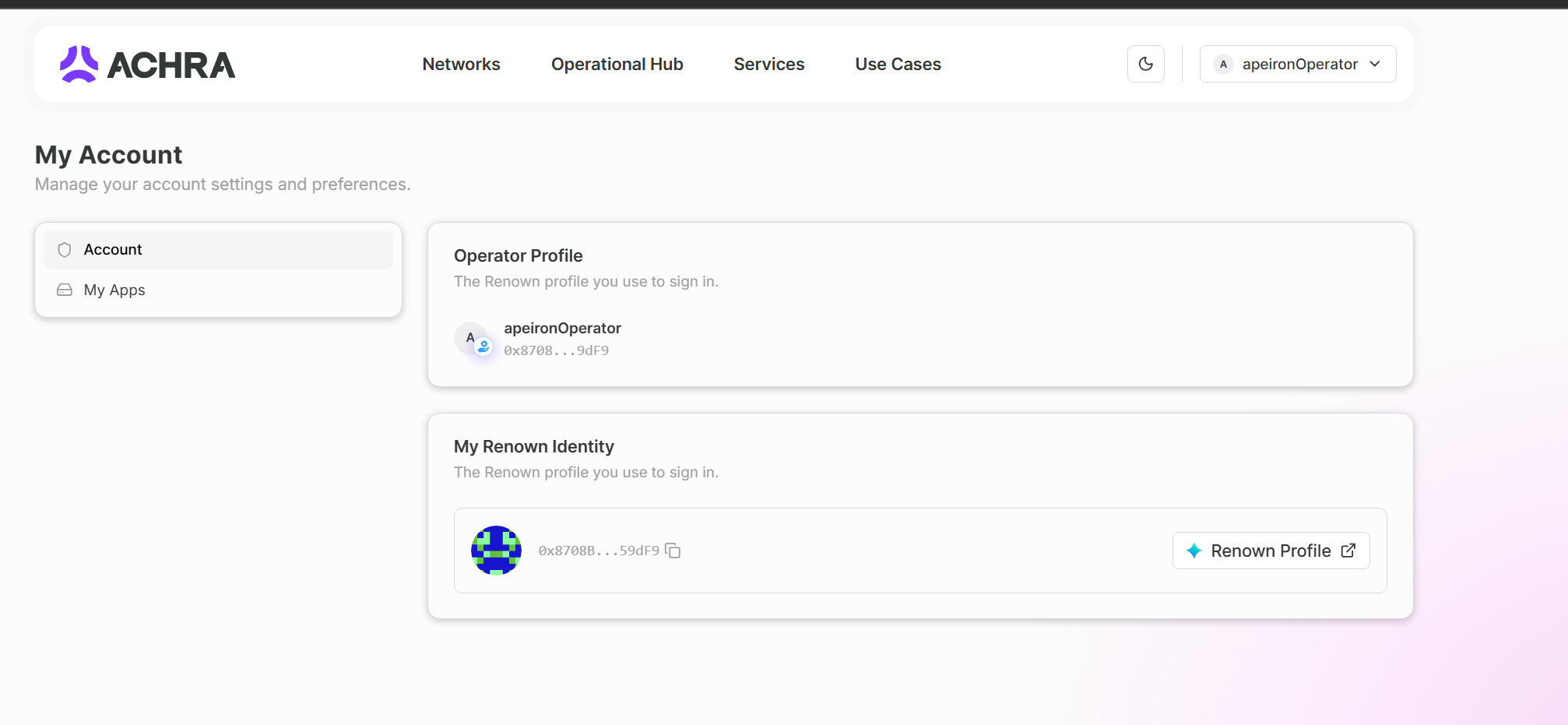
The Hub is a set of Powerhouse documents in a drive the customer owns, not records in someone else’s system. Identity is portable, and because every document carries a signed history, the back office is auditable by construction — the reports are the running state, not something generated later. A services company hands customers a real operational home, not a login.
- Ops stops being a side job — funding, payouts, and compliance run as workflows.
- The entity decision is made on facts, not scattered advice.
- The customer owns their back office — docs and records live in a drive they control.
- Auditable from day one — every document carries a verifiable history.
Same framework, your domain
Have a problem that looks nothing like these?
These are a handful of examples, not a product list — the same building blocks adapt to whatever you’re working on.